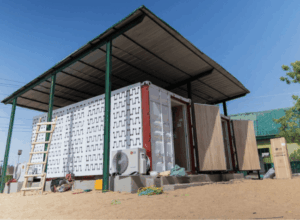
In a drive to improve public health and reduce reliance on Nigeria’s national grid, the Abia State Government has commissioned a solar power system with battery storage at a diagnostic center in Umuahia. This initiative is designed to ensure uninterrupted power for healthcare delivery and is set to be replicated at ten other medical facilities across the state. In a related effort, the state has also launched a solar-assisted public sanitation program to improve hygiene.
Meanwhile, in northern Nigeria, the medical humanitarian organization Doctors Without Borders (MSF) has turned to solar power to enhance healthcare in remote regions. At the Zurmi General Hospital in Zamfara State, a 250kW solar system has replaced costly and unreliable diesel generators. This transition has provided stable power for critical services, including surgical procedures, neonatal care, and vaccine refrigeration, which were previously at risk from power outages.
These efforts come at a time when climate-related challenges are increasingly impacting public health in Nigeria, contributing to rising malnutrition and malaria cases. By reducing their dependence on expensive and polluting diesel fuel, both the Abia State government and MSF are not only improving healthcare services but also redirecting resources to essential care, creating a more resilient and sustainable solution for communities.