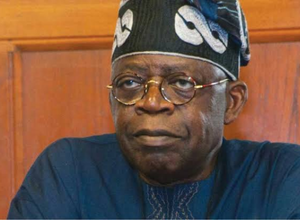
President Bola Ahmed Tinubu has approved a new six-year external borrowing plan that outlines an ambitious roadmap for Nigeria’s infrastructure development. The plan, which has been approved by the National Assembly, is designed to close the country’s infrastructure deficit and stimulate economic revitalization. It will fund more than a dozen major projects at both the federal and state levels through multilateral and bilateral credit windows, reflecting a strategic approach to secure capital for long-term growth.
The plan prioritizes key transportation and energy projects. A substantial $3 billion has been allocated to revitalize the 2,044km Eastern rail corridor, which stretches from Port Harcourt to Maiduguri and is crucial for unlocking trade and mobility. The energy sector will receive a combined $2.21 billion for the development of Eastern and Western Super Grids, aimed at stabilizing national electricity transmission. Additionally, a $1.33 billion investment is earmarked for the Akwanga–Jos–Bauchi–Gombe dual carriageway, which will enhance trade in the north.
Beyond infrastructure, the blueprint also allocates funds for social and security initiatives. It includes a $100 million investment in a National Youth Entrepreneurship Investment Programme, a $45 million health infrastructure project in Sokoto, and a $540 million investment in the Nigeria Border Security Project. Key projects like the Lagos-Calabar Coastal Highway and the Lekki Access Road will be delivered with the help of Export Credit Agencies, showcasing a new confidence in leveraging diverse international financing instruments to drive development and job creation.